

Outdoor Kiosk
Industrial Outdoor Kiosk | Engineering & Manufacturing Specifications
Outdoor kiosks serve as mission-critical terminal hardware for self-service transactions, public broadcasting, and wayfinding in unshielded external environments. Built for continuous operation under severe weather profiles and high-traffic public zones, these units integrate precision sheet metal fabrication, industrial-grade thermal management, and high-brightness optical bonding.
Primary Functions: Self-service ticketing, digital wayfinding, interactive public information access, automated payment processing, and emergency broadcasting.
Target Deployment Sectors: Municipal transit networks, smart city developments, university and corporate campuses, retail parks, and hospitality venues.
Target B2B Clientele: AV system integrators, OEM equipment providers, smart infrastructure contractors, and project developers requiring robust, field-tested enclosure hardware.

Product Types & Configurations
Deployment requirements dictate structural design and mounting mechanics. Three standard configurations support modular integration:
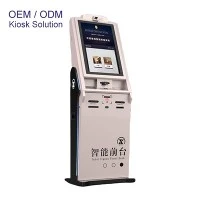
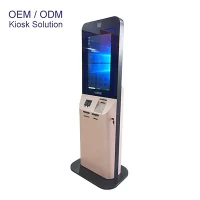
Freestanding Monolith Kiosk
Structure: Floor-anchored heavy-gauge steel chassis with internal structural reinforcement frames.
Application: High-density pedestrian areas, transit platforms, and public squares needing dual-direction viewing.


Wall-Mounted Enclosure
Structure: Direct structural-wall bolting chassis with side-hinged or front-swing service access doors.
Application: Building exteriors, railway station concourses, and narrow sidewalk corridors with spatial constraints.
Drive-Thru / Compact Pedestal Kiosk
Structure: Low-profile sloped-top housing designed for vehicular access or seated user ergonomics, accommodating specialized peripherals (POS terminals, intercoms, barcode scanners).
Application: QSR drive-thrus, automated parking garages, and secure access checkpoints.

Key Specifications
| Parameter | Specification Detail |
| Ingress Protection (IP / NEMA) | IP65 rated / NEMA 4X compliant (complete protection against dust ingress, corrosion, and high-pressure water jets). |
| Vandal Resistance (IK) | IK10 rated impact resistance (tested against 20J kinetic energy impacts; 10mm tempered safety glass or polycarbonate shield options). |
| Operating Temperature | -40°C to +55°C (managed via integrated forced-air ventilation or closed-loop compressor air conditioning). |
| Display Brightness | 2,500 nits to 3,500 nits with auto-dimming ambient light sensors for direct sunlight readability. |
| Optical Configuration | Direct-view LCD panel with optical gel bonding (prevents internal condensation and eliminates solar reflections). |
| Structural Material | 2.0mm to 3.0mm SGCC galvanized steel or 304/316 marine-grade stainless steel frame. |
| Surface Finish | Multi-layer outdoor-grade polyester powder coating (anti-corrosion, UV-resistant, salt-spray tested over 1,000 hours). |
| Service Access | Front-service hydraulic strut doors or rear-maintenance secure access panels with multi-point cam locks. |
Applications & Project Requirements
Public Transit & Smart City Hubs
Operational Need: 24/7 reliability, real-time schedule displays, emergency intercom integration, and ADA-compliant accessibility heights.
Quick-Service Restaurants (QSR) Drive-Thru
Operational Need: High thermal tolerance against direct solar load in open parking lots, rapid touch response times, and integrated payment/ordering peripherals.
Campus & Corporate Wayfinding
Operational Need: Weatherproofing against heavy rain and snow, tamper-proof peripheral integration, and sleek architectural aesthetics matching modern corporate facades.
Customization & OEM/ODM Capabilities
Hardware adaptation aligns with specific integrator and software ecosystems:
Enclosure & Appearance:
Custom RAL color matching, laser-cut corporate logos, custom dimensional depths for specific internal PC/IPC form factors, and modular canopy additions.
Hardware Integration:
Support for thermal receipt printers, QR/barcode scanners, EMV payment terminals, RFID/NFC card readers, PTZ security cameras, and 5G/Wi-Fi router brackets.
Display & Computing:
Selection of screen sizes (32-inch to 85-inch), touch technology integration (PCAP multi-touch with glove/water rejection), and embedded industrial PC configurations (Windows/Linux OS support).
Interface & Power Distribution:
Integrated surge protectors, smart power distribution units (PDUs), UPS battery backup options, and internal cable management trays.
Production relies on precision automated machinery and rigorous environmental stress testing to verify field survival.
Fabrication Infrastructure: CNC laser cutting centers, CNC turret punch presses, and robotic press brakes ensure dimensional accuracy of steel enclosures within ±0.1 mm.
Welding & Assembly: Certified MIG/TIG welding followed by automated electrostatic powder coating lines and high-temperature curing ovens.
Testing Protocol:
Thermal Chamber Testing: 48-hour continuous burn-in test at extreme high and low temperature thresholds.
Rain Simulation Test: Pressurized water-jet testing verifying IP65 / NEMA 4X gasket seal integrity.
Vibration & Impact Testing: Structural stress checks simulating transport vibration and physical vandalism attempts.
Compliance & Electrical Safety: ISO 9001 quality management system, CE, RoHS, FCC compliance, and available UL/ETL certified electrical component assemblies for North American municipal standards.

Frequently Asked Questions

Request a Quote
Submitting precise project details accelerates technical review and pricing proposals. Include the following parameters in your inquiry:
Project Scale: Estimated unit quantity and phased delivery schedule.
Deployment Environment: Geographic location, climate conditions, and indoor/outdoor placement details.
Structural Configuration: Freestanding, wall-mounted, or custom enclosure preference.
Core Specifications: Required screen size, brightness level (nits), touch functionality, and operating system requirements.
Integrated Peripherals: List of required third-party hardware (payment terminals, printers, scanners, cameras).
Technical Documentation: Attach mechanical layout drawings, CAD files, or system integration schematics if available.